
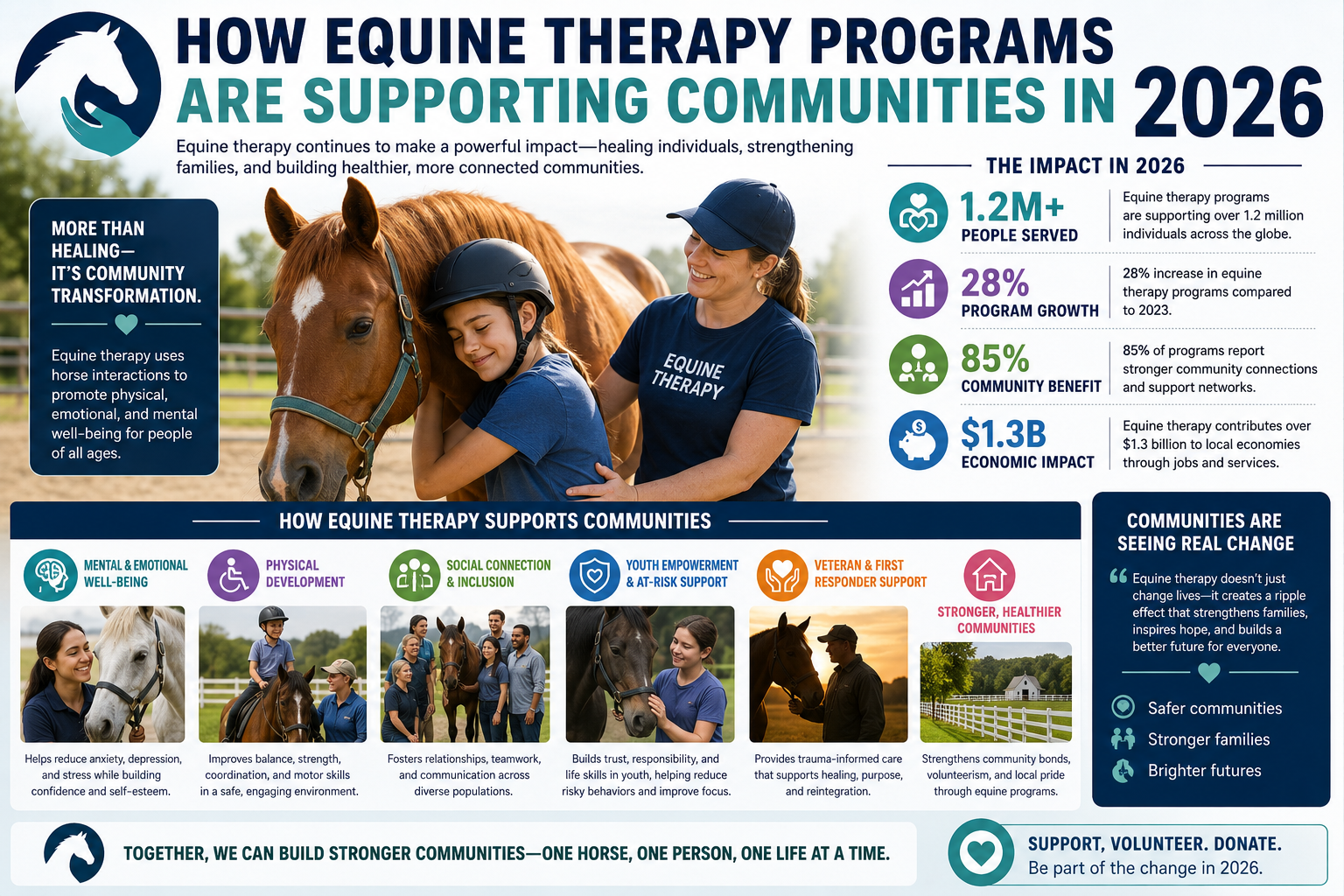

Equine therapy programs are continuing to grow across communities in 2026.
What was once considered a niche form of support has evolved into a widely recognized approach for emotional wellness, youth development, rehabilitation, and community engagement.
Across schools, nonprofit organizations, therapy centers, and equestrian outreach programs, horses are playing a larger role in helping people reconnect with confidence, communication, and emotional balance.
Many communities are also beginning to recognize that equine-assisted activities offer benefits that extend beyond traditional riding lessons.
For participants of different ages and backgrounds, spending time around horses can create meaningful experiences that support both mental and physical well-being.
Why Equine Therapy Continues Growing in 2026
One major reason equine therapy programs are expanding is increased awareness around mental health and community wellness.
More families, educators, and healthcare professionals are exploring alternative therapeutic approaches that encourage emotional connection and personal growth.
Horses naturally encourage patience, trust, consistency, and calm communication.
Unlike digital environments that dominate modern life, equestrian settings provide slower, more grounded interactions that many participants find deeply therapeutic.
Programs centered around horse-assisted activities are now supporting:
- youth development
- veterans programs
- emotional wellness initiatives
- adaptive riding
- trauma recovery support
- community outreach activities
According to PATH International, equine-assisted services continue expanding globally as more communities recognize the therapeutic value of horse-human interaction.
The Emotional Connection Between Humans and Horses
One of the most unique aspects of equine therapy is the emotional connection horses create with people.
Horses are highly responsive animals.
They react to body language, tone, and emotional energy, which encourages participants to become more aware of their own behavior and communication style.
For many individuals, this interaction helps build:
- emotional awareness
- self-confidence
- trust
- patience
- mindfulness
- social connection
Unlike highly structured environments, equine settings often feel more natural and less intimidating for participants.
This can be especially valuable for individuals who struggle in traditional therapeutic or educational settings.
Equine Programs Are Supporting Youth Development
Many equestrian outreach programs now focus heavily on supporting children and teenagers.
Modern youth face increasing pressure from:
- social media
- academic stress
- online environments
- anxiety-related challenges
- reduced outdoor activity
Equine programs provide opportunities for young people to engage in hands-on learning and real-world responsibility.
Caring for horses often teaches:
H3: Responsibility and Routine
Participants learn consistency through feeding, grooming, and stable care routines.
H3: Communication Skills
Horse interactions encourage calm communication and nonverbal awareness.
H3: Confidence Building
Successfully working with large animals often improves self-esteem and independence.
Programs highlighted on the Equestrian Outreach blog frequently reflect the growing importance of community-centered equestrian education and outreach initiatives.
Veterans and First Responders Are Also Benefiting
Equine-assisted programs are increasingly being used to support veterans and first responders.
Many participants describe horse interactions as calming and emotionally grounding.
Equestrian environments may help reduce stress while encouraging trust and connection in a nonjudgmental setting.
Although equine therapy is not a replacement for professional medical treatment, many organizations now integrate horse-assisted activities into broader wellness programs.
According to The American Psychological Association, animal-assisted interventions can contribute positively to emotional support and stress reduction when combined with appropriate care programs.
Community-Based Equestrian Programs Are Becoming More Accessible
Accessibility has become a major focus in 2026.
More nonprofit organizations and equestrian communities are working to make horse programs available to broader audiences.
This includes:
- adaptive riding programs
- scholarship-supported participation
- community outreach events
- youth mentorship opportunities
- inclusive equestrian education
Many local organizations are also partnering with schools and community centers to introduce equine activities to families who may not otherwise have access to them.
This broader accessibility is helping equestrian communities grow in more inclusive and supportive ways.
Outdoor Experiences Matter More in a Digital World
Modern life has become increasingly digital.
Many people now spend most of their time indoors using screens, devices, and online platforms.
Equestrian environments offer something very different.
Horse programs encourage:
- outdoor activity
- physical movement
- direct human interaction
- focused attention
- reduced screen time
For many participants, simply spending time in a calm barn environment provides a meaningful break from daily digital overload.
This is one reason equine wellness programs continue gaining attention across different age groups.
Horses Help Encourage Patience and Mindfulness
Working with horses requires patience.
Unlike fast-moving digital experiences, horses respond best to calm and consistent behavior.
Participants often learn the importance of:
- slowing down
- staying focused
- regulating emotions
- building trust gradually
These lessons can extend into daily life outside the equestrian environment.
Many participants describe horse-assisted activities as helping them feel more present and emotionally balanced.
The Future of Equine Outreach Programs
Equestrian outreach programs are expected to continue growing throughout the coming years.
Communities are increasingly recognizing the value of combining:
- wellness support
- outdoor education
- mentorship
- therapeutic interaction
- equestrian learning
into accessible community-centered programs.
Technology may continue changing how people communicate and consume information, but human connection remains important.
Horse-centered programs offer experiences that feel authentic, grounded, and community-focused.
Organizations such as Equestrian Outreach continue helping expand awareness around equestrian education, outreach initiatives, and community engagement through horse-assisted programs.
FAQ
What is equine therapy?
Equine therapy involves structured activities with horses designed to support emotional wellness, personal development, and therapeutic goals.
Who can benefit from equine therapy programs?
Equine-assisted programs may support children, teenagers, veterans, individuals with disabilities, and people seeking emotional wellness or community connection.
Are equine therapy programs only for experienced riders?
No. Many programs are designed for beginners and may focus more on horse interaction, grooming, and ground activities rather than riding.
Why are horses effective in therapy settings?
Horses respond naturally to human behavior and emotions, helping participants build trust, communication skills, confidence, and mindfulness.
Are equestrian outreach programs becoming more common?
Yes. Community-based equestrian outreach and horse-assisted wellness programs continue expanding in many regions throughout 2026.