
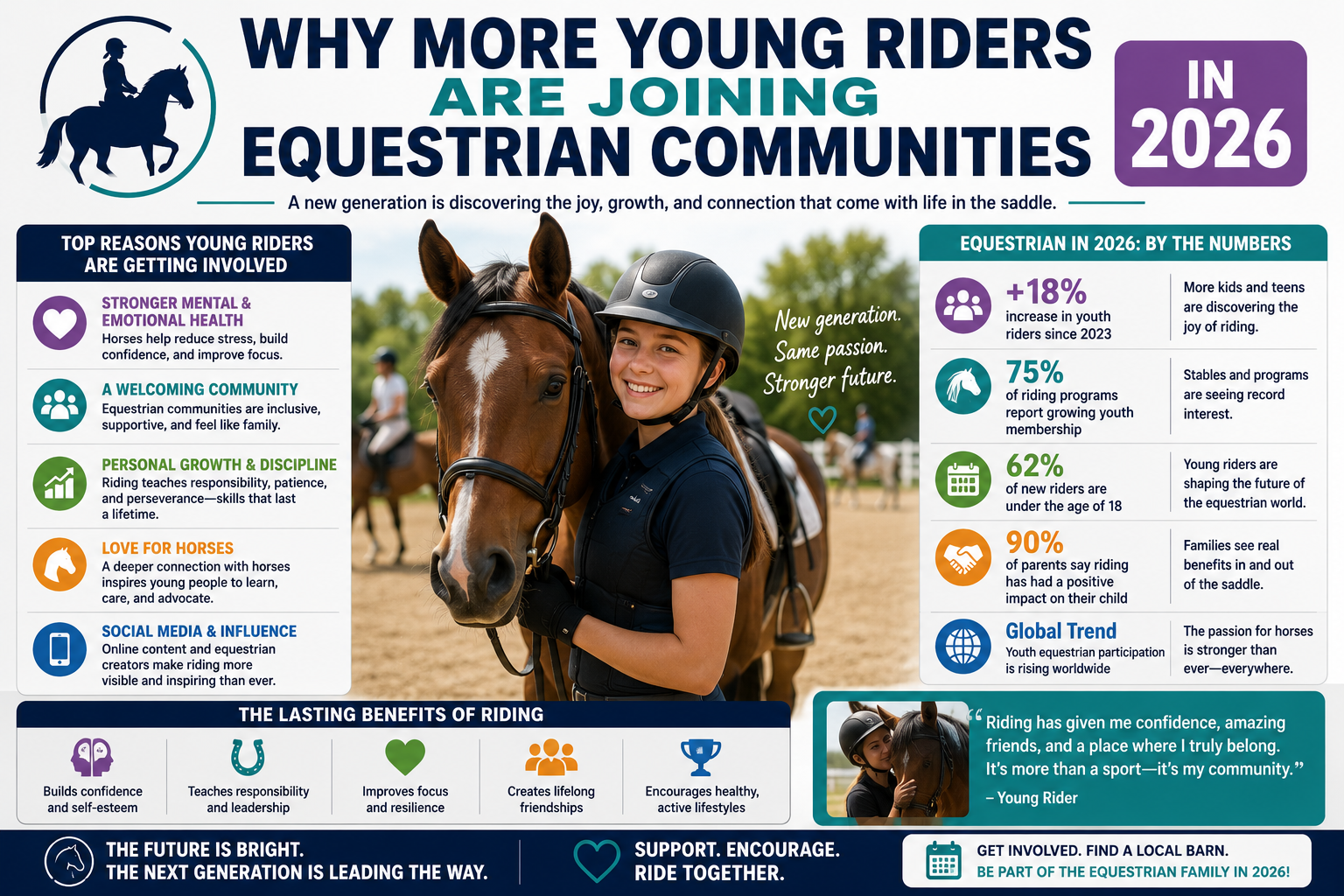

Equestrian communities are seeing growing interest from younger generations in 2026.
Across riding schools, local barns, outreach programs, and community equestrian centers, more children and teenagers are becoming involved in horse-related activities than many people expected.
For some families, riding offers a healthy outdoor hobby.
For others, it provides structure, confidence-building experiences, and opportunities to connect with supportive communities.
The rise in youth participation is also happening during a time when many parents are searching for activities that encourage real-world interaction and reduced screen time.
As a result, equestrian programs are becoming increasingly valuable not only as sports environments, but also as educational and community-centered spaces.
Young Riders Are Looking for More Meaningful Activities
Modern youth spend much of their time online.
Between social media, gaming, streaming platforms, and digital entertainment, many families are actively searching for activities that encourage outdoor engagement and personal growth.
Horse riding provides a very different experience compared to most modern digital activities.
Working with horses requires:
- patience
- focus
- communication
- responsibility
- emotional awareness
Many young riders are drawn to the calm and hands-on nature of equestrian environments.
Unlike highly competitive online spaces, barns and riding communities often create opportunities for slower, more meaningful interaction.
According to The American Camp Association, outdoor youth programs continue supporting confidence, social development, and emotional resilience among younger participants.
Riding Helps Build Confidence Over Time
One of the biggest reasons many young people stay involved in equestrian communities is confidence development.
Learning to ride and care for horses takes time.
Progress usually happens gradually, which teaches patience and persistence.
Young riders often gain confidence through:
- mastering riding skills
- building trust with horses
- learning stable routines
- participating in group activities
- overcoming nervousness
Successfully handling large animals can also help children and teenagers develop stronger self-belief and independence.
These lessons frequently extend beyond riding itself and influence other areas of life such as school, communication, and teamwork.
Equestrian Communities Often Feel Supportive and Welcoming
Another reason equestrian communities continue growing is the sense of connection they provide.
Many riding barns create environments where riders support and encourage each other regardless of skill level.
For beginners, this atmosphere can feel far less intimidating than highly competitive sports settings.
Community-focused riding programs often encourage:
- mentorship
- teamwork
- friendship
- shared learning
- mutual responsibility
This sense of belonging is becoming increasingly valuable for younger generations.
Programs featured on the Equestrian Outreach blog often highlight how equestrian communities bring together riders, families, volunteers, and local organizations through horse-centered activities.
Horse Riding Encourages Responsibility
Unlike many recreational activities, riding usually involves caring for another living animal.
Young riders often participate in:
- grooming
- feeding
- cleaning equipment
- preparing tack
- stable routines
These responsibilities help teach consistency and accountability.
Parents frequently appreciate that equestrian activities combine recreation with practical life skills.
Learning how to care for horses may also encourage empathy and stronger awareness of animal welfare.
Outdoor Activities Are Becoming More Important
As digital lifestyles continue expanding, outdoor recreation is becoming increasingly important for physical and mental well-being.
Horse riding naturally encourages outdoor activity and movement.
Spending time around horses may help young riders:
- stay physically active
- improve coordination
- reduce stress
- spend less time on screens
- build stronger focus
According to Children & Nature Network, regular outdoor experiences can positively support child development, emotional health, and attention span.
Equestrian environments often provide a combination of physical activity and calming natural surroundings that many families find beneficial.
Social Media Has Increased Interest in Equestrian Life
Interestingly, digital platforms have also contributed to growing interest in equestrian culture.
Many younger riders first discover horse riding through:
- riding videos
- equestrian creators
- training content
- horse care tutorials
- online riding communities
Social platforms have helped make equestrian activities feel more accessible and relatable to wider audiences.
However, many young riders eventually realize that real equestrian experiences involve much more than social media highlights.
Horse riding requires dedication, patience, and consistent learning.
That reality often helps build stronger appreciation for the equestrian lifestyle itself.
Riding Programs Are Becoming More Accessible
Another major reason participation is increasing is accessibility.
More riding centers and outreach organizations are working to make equestrian experiences available to broader communities.
This includes:
- beginner riding programs
- youth outreach events
- scholarship opportunities
- therapeutic riding programs
- educational workshops
Community-centered equestrian organizations are helping reduce barriers for families interested in introducing children to horse activities.
This broader access is helping equestrian communities continue growing in 2026.
Young Riders Are Interested in More Than Competition
While horse competitions remain popular, many younger riders today are equally interested in:
- horse care
- trail riding
- animal connection
- equine wellness
- riding education
- outdoor lifestyle experiences
This shift reflects broader changes in how younger generations approach hobbies and community involvement.
For many riders, the experience and connection matter more than competition alone.
Equestrian Communities Continue Evolving
Modern equestrian communities are becoming more inclusive and education-focused.
Many organizations now combine:
- riding instruction
- mentorship
- youth support
- wellness initiatives
- community outreach
into broader equestrian experiences.
This approach helps create environments where young riders feel welcomed regardless of experience level.
Organizations such as Equestrian Outreach continue supporting horse education, youth participation, and community-centered equestrian programs that encourage long-term involvement with horses and riding culture.
FAQ
Why are more young people interested in horse riding?
Many young riders are looking for outdoor activities, supportive communities, and experiences that encourage confidence, responsibility, and personal growth.
Is horse riding suitable for beginners?
Yes. Many equestrian programs offer beginner-friendly riding lessons and educational activities designed for first-time riders.
What skills can young riders learn through equestrian programs?
Horse riding often helps develop communication, patience, responsibility, teamwork, focus, and confidence.
Are equestrian communities only focused on competition?
No. Many riders participate for recreation, horse care education, trail riding, community involvement, and wellness benefits rather than competition alone.
How do horses help support youth development?
Working with horses encourages emotional awareness, responsibility, patience, and consistent learning in a hands-on environment.