
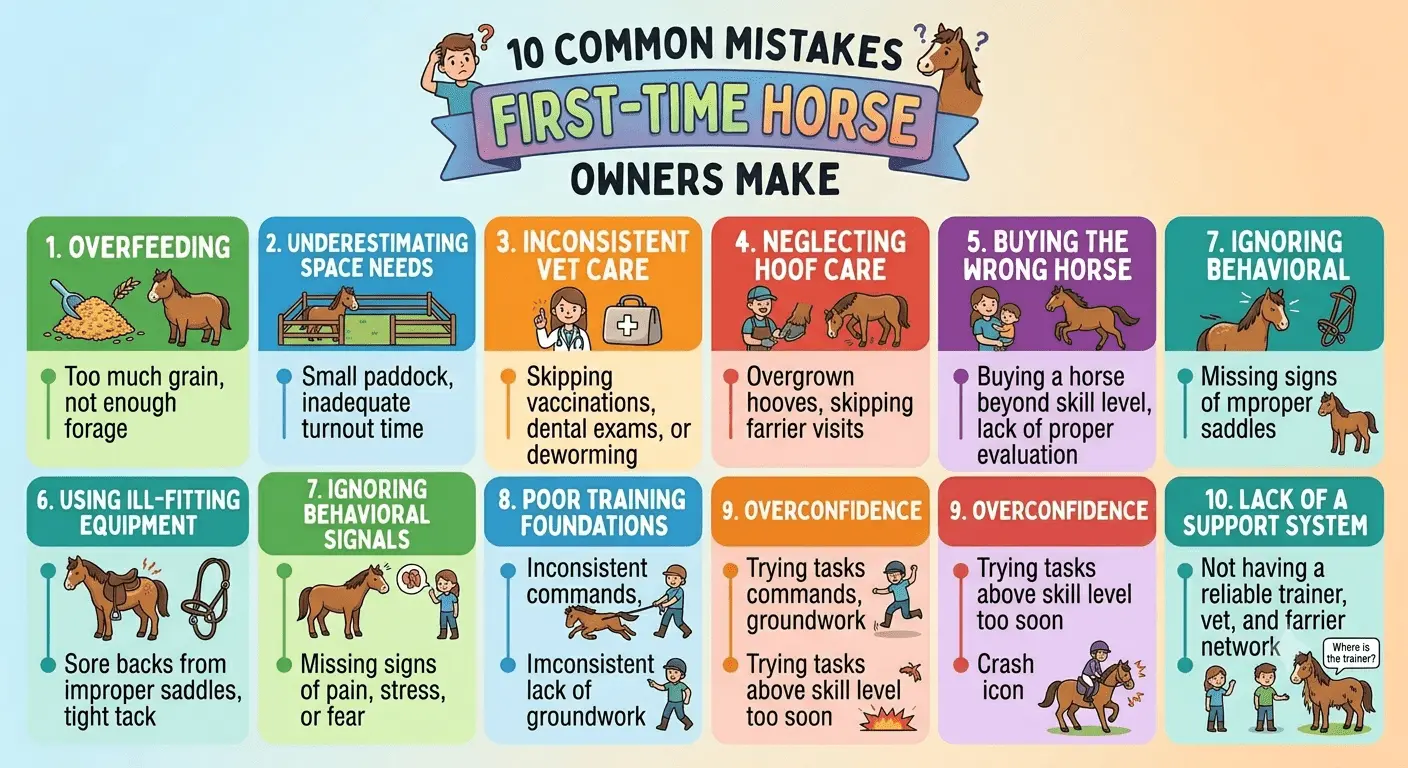

Owning a horse for the first time is an exciting and rewarding experience. However, many new owners quickly discover that horse ownership involves far more than simply providing food and shelter. Horses require daily care, proper management, financial planning, and ongoing education to thrive.
Understanding the most common mistakes made by first-time horse owners can help prevent unnecessary challenges and improve the welfare of both horse and owner.
1. Underestimating the Cost of Horse Ownership
One of the biggest mistakes new owners make is focusing only on the purchase price of a horse. The ongoing costs of feed, hay, veterinary care, farrier services, boarding, equipment, and emergency expenses often exceed initial expectations. Financial planning should be part of every horse ownership decision.
2. Choosing the Wrong Horse
Many beginners purchase horses based on appearance, breed popularity, or emotional attachment rather than suitability. A horse's temperament, training level, age, and intended use should always be carefully evaluated before purchase. Matching the horse to the owner's experience level greatly increases the likelihood of success.
3. Skipping a Pre-Purchase Examination
Failing to have a veterinarian evaluate a horse before purchase can result in unexpected medical issues and costly treatments. A professional examination can identify health concerns, soundness issues, and other potential problems before ownership begins.
4. Inadequate Nutrition Planning
Feeding a horse improperly can lead to obesity, malnutrition, digestive disorders, and performance problems. Horses require balanced diets that primarily consist of forage, clean water, and appropriate supplementation when necessary. Understanding basic equine nutrition is essential for long-term health.
5. Neglecting Hoof Care
Healthy hooves are critical to a horse's comfort and mobility. New owners sometimes underestimate the importance of routine farrier visits. Most horses require hoof trimming every six to eight weeks to maintain proper hoof health and prevent lameness issues.
6. Ignoring Dental and Preventive Healthcare
Routine veterinary care is not optional. Annual dental examinations, vaccinations, parasite control, and wellness checks help prevent many common health problems. Preventive care is often less expensive than treating advanced medical conditions.
7. Failing to Provide Adequate Exercise
Horses are naturally active animals that require movement for physical and mental well-being. Lack of exercise can contribute to obesity, behavioral problems, and poor overall health. Regular turnout and appropriate activity are important parts of responsible horse management.
8. Not Seeking Professional Guidance
Many beginners attempt to learn everything through trial and error. While experience is valuable, working with trainers, veterinarians, farriers, and experienced horse owners can help prevent costly mistakes and improve confidence. Building a reliable support network is one of the smartest investments a new owner can make.
9. Overlooking Emergency Preparedness
Emergencies can happen unexpectedly. New horse owners should have emergency contact information, transportation plans, first-aid supplies, and veterinary resources readily available. Preparation can significantly improve outcomes during medical emergencies or natural disasters.
10. Forgetting That Horses Are a Long-Term Commitment
Horse ownership requires a significant investment of time, money, and responsibility. Horses can live for decades and require consistent care throughout their lives. Prospective owners should carefully evaluate their long-term ability to meet a horse's needs before making a purchase decision.
What New Horse Owners Should Focus On
- Learning proper horse care fundamentals
- Building relationships with equine professionals
- Creating realistic budgets
- Establishing preventive healthcare routines
- Understanding horse behavior and welfare
- Developing safe handling practices
Educational Resources for Beginners
The UNL Horse Owner Survival Guide provides valuable information on horse behavior, safety, feeding, management, welfare, and ownership considerations. These educational materials help new owners better understand the responsibilities involved in caring for horses.
Building a Strong Foundation for Success
Successful horse ownership begins with education and preparation. Reviewing a comprehensive first-time horse owner guide can help beginners avoid common mistakes and develop the knowledge needed to provide excellent care.
Ongoing horse ownership education improves confidence and helps owners make informed decisions throughout their horse's life.
When questions arise, seeking reliable horse care support can make the journey of horse ownership more enjoyable and successful.
Final Thoughts
Every horse owner makes mistakes from time to time, but learning from the experiences of others can help new owners avoid common pitfalls. By focusing on education, proper planning, preventive healthcare, and responsible management, first-time horse owners can create a safe, rewarding, and fulfilling experience for both themselves and their horses.
With patience, commitment, and a willingness to learn, horse ownership can become one of life's most rewarding adventures.