
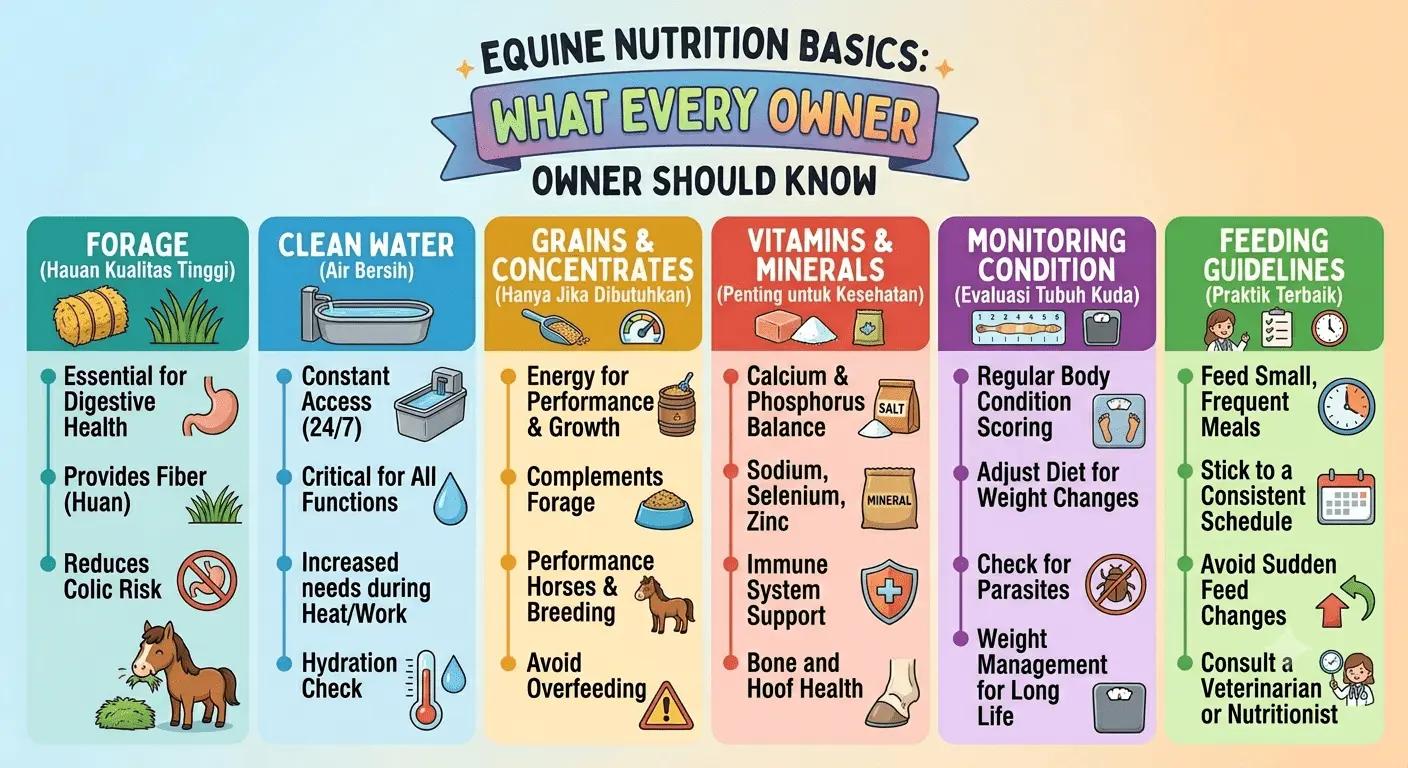

Proper nutrition is one of the most important factors influencing a horse's overall health, performance, longevity, and well-being. Whether you own a pleasure horse, companion horse, rescue horse, or performance athlete, understanding basic equine nutrition can help ensure your horse receives the nutrients necessary to thrive.
While feeding horses may appear straightforward, nutritional needs vary based on age, workload, health status, environment, and individual metabolism. Learning the fundamentals of equine feeding allows owners to make informed decisions that support long-term horse wellness.
The Foundation of Every Horse's Diet: Forage
Forage should form the foundation of nearly every horse's diet. Grass pasture and high-quality hay provide the fiber necessary for proper digestive function and overall gastrointestinal health.
Equine nutrition experts generally recommend that horses receive most of their daily nutrition from forage whenever possible. Adequate fiber intake supports healthy digestion and helps reduce the risk of digestive disorders.
Fresh Water Is Essential
Water is often considered the most important nutrient in a horse's diet. Horses require constant access to clean, fresh water to support digestion, temperature regulation, circulation, and overall health.
Hydration needs increase during hot weather, exercise, transportation, and periods of illness. Equine education programs frequently emphasize water availability as a critical component of horse management.
Understanding Concentrates and Grain
Not every horse requires grain or concentrate feeds. Many horses maintained on quality forage and moderate workloads can meet their nutritional needs without large amounts of supplemental feed.
Performance horses, growing horses, breeding mares, and horses with increased energy requirements may benefit from carefully balanced concentrate feeds designed to complement forage intake.
Vitamins and Minerals Matter
Horses require essential vitamins and minerals to support healthy bones, muscles, nerves, metabolism, and immune function. Key nutrients include calcium, phosphorus, magnesium, sodium, potassium, zinc, copper, and selenium.
Depending on forage quality and local conditions, some horses may benefit from targeted supplementation under professional guidance.
Feed Small Meals Consistently
Horses are natural grazers and are designed to consume small amounts of forage throughout the day. Large, infrequent meals can place unnecessary stress on the digestive system.
Whenever possible, feeding schedules should mimic natural grazing behavior by providing regular access to forage and avoiding sudden dietary changes.
Body Condition Scoring Helps Monitor Health
Monitoring body condition is an effective way to evaluate whether a horse is receiving appropriate nutrition. Horses that are underweight may require dietary adjustments, while overweight horses may benefit from calorie management and increased exercise.
Regular weight monitoring helps owners identify changes before they become significant health concerns.
Common Feeding Mistakes Horse Owners Make
- Overfeeding grain concentrates
- Providing insufficient forage
- Making sudden feed changes
- Neglecting water availability
- Ignoring mineral requirements
- Using supplements without professional guidance
- Failing to adjust diets based on workload
Many nutrition-related issues can be avoided through proper education and careful feeding management.
Nutrition Changes Throughout a Horse's Life
Nutritional requirements change as horses age. Growing foals, active performance horses, pregnant mares, senior horses, and retired companions all have different dietary needs.
Owners should periodically evaluate feeding programs to ensure they remain appropriate for the horse's current stage of life and activity level.
Learning From Equine Nutrition Professionals
Continuing education is one of the best ways to improve horse care. Organizations focused on equine welfare and education provide valuable information for horse owners seeking to improve feeding practices and overall management.
Equine Resources Indonesia Education offers educational programs covering horse health, equine nutrition basics, stable management, and welfare-focused horse care practices. Their training programs are designed to help riders, owners, grooms, and equestrian professionals develop a stronger understanding of responsible horse management.
Building a Healthy Feeding Program
Developing a successful feeding strategy starts with understanding your horse's individual needs. Accessing reliable equine nutrition resources can help owners make informed feeding decisions that support long-term health and performance.
A carefully planned healthy feeding program should consider forage quality, water availability, workload, age, and veterinary recommendations.
Ongoing horse wellness education allows owners to adapt feeding practices as their horses' needs evolve over time.
Final Thoughts
Good nutrition is one of the most powerful tools available for supporting equine health and welfare. By focusing on quality forage, adequate hydration, balanced nutrient intake, and continuous education, horse owners can create feeding programs that promote long-term wellness and performance.
Every horse is unique, but a solid understanding of equine nutrition basics provides the foundation for responsible ownership and excellent horse care.