
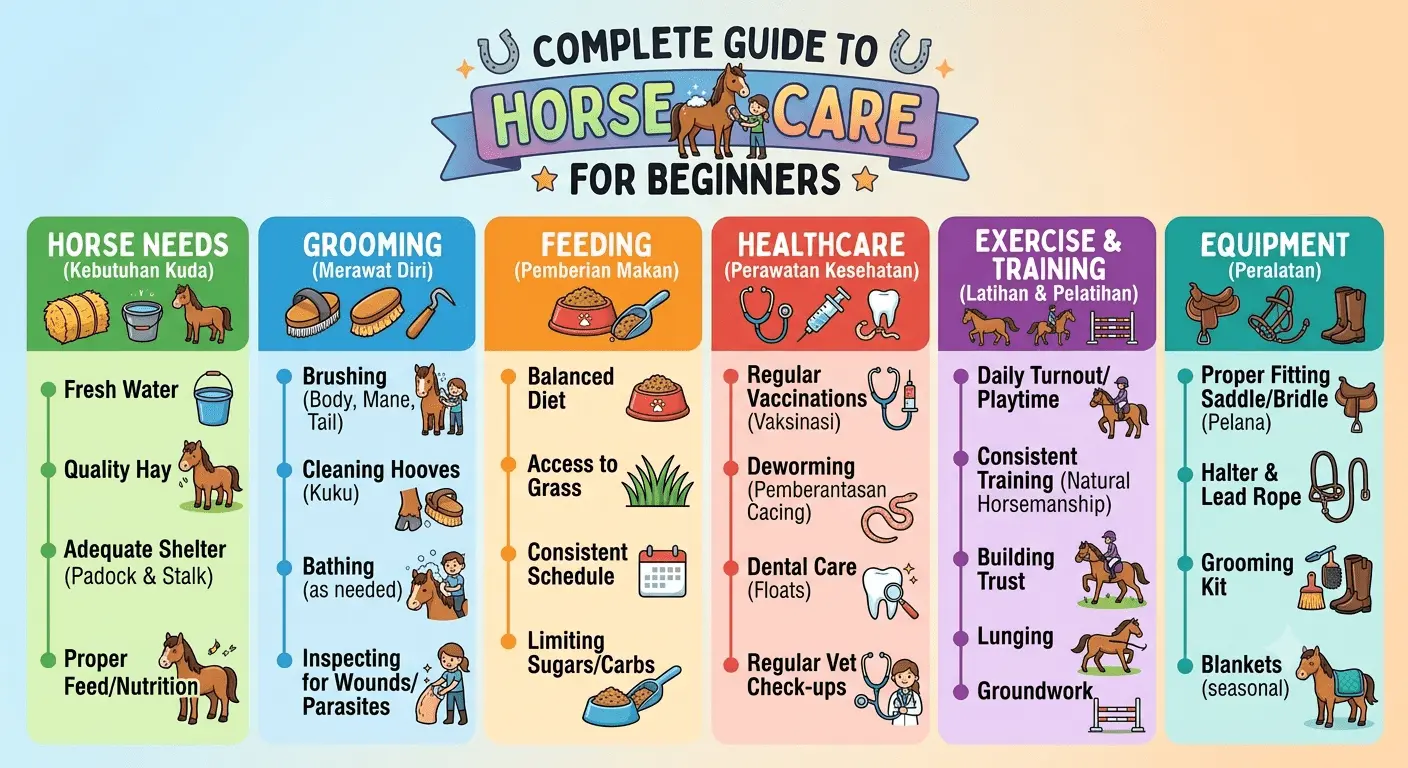

Owning a horse can be one of the most rewarding experiences for animal lovers. Horses are intelligent, social, and athletic animals that require consistent care, proper nutrition, regular exercise, and ongoing health management. For first-time horse owners, understanding the fundamentals of horse care is essential for maintaining a healthy and happy equine companion.
This beginner-friendly guide covers the essential aspects of horse ownership, including feeding, shelter, grooming, exercise, healthcare, and overall welfare.
Understanding a Horse's Basic Needs
Like all animals, horses require access to clean water, quality nutrition, safe shelter, and regular veterinary care. Horses are herd animals by nature and thrive when they receive social interaction, mental stimulation, and consistent daily routines.
Providing these essentials creates the foundation for long-term equine health and welfare.
Provide Fresh Water at All Times
Water is one of the most important components of horse care. An average horse may consume between 5 and 15 gallons of water per day depending on weather conditions, activity level, and diet.
Water sources should be checked daily to ensure they remain clean, fresh, and free from contamination.
Feed a Balanced Diet
A horse's diet should primarily consist of forage, including pasture grass and quality hay. Concentrates and grain may be necessary for certain horses based on age, workload, and nutritional requirements.
- High-quality hay
- Fresh pasture when available
- Clean drinking water
- Mineral and salt supplements as needed
- Veterinarian-approved feed programs
Overfeeding or providing improper nutrition can contribute to obesity, digestive problems, and other health concerns.
Create a Safe Living Environment
Horses require a safe and secure environment that protects them from extreme weather, hazards, and injury risks. Whether housed in a pasture, paddock, or barn, horses should have access to shelter from rain, wind, excessive heat, and cold temperatures.
Fencing should be regularly inspected to ensure it remains safe and secure.
Regular Grooming Is Essential
Routine grooming helps maintain coat health, improves circulation, strengthens the bond between horse and owner, and allows early detection of injuries or health issues.
- Brush the coat regularly
- Clean hooves daily
- Check for cuts and swelling
- Inspect skin condition
- Monitor for signs of parasites
Daily observation often helps identify minor problems before they become serious health concerns.
Prioritize Hoof Care
Healthy hooves are critical to a horse's overall well-being. Horses should receive regular hoof trimming and farrier care based on their individual needs.
Neglected hooves can lead to discomfort, lameness, and long-term mobility issues.
Schedule Routine Veterinary Care
Preventive healthcare plays an important role in horse ownership. Routine veterinary visits help monitor overall health and detect potential issues early.
- Vaccinations
- Dental examinations
- Parasite control programs
- Annual wellness checks
- Nutritional evaluations
Working closely with an equine veterinarian helps ensure your horse remains healthy throughout its life.
Exercise and Mental Stimulation
Horses benefit from regular physical activity and mental engagement. Exercise helps maintain healthy muscles, joints, cardiovascular fitness, and overall behavior.
Depending on age and condition, exercise may include riding, groundwork, turnout, obstacle training, or recreational activities.
Learn Equine Body Language
Understanding horse behavior is an important skill for new owners. Horses communicate through body posture, ear position, facial expressions, and movement.
Recognizing signs of stress, discomfort, fear, or illness can help owners respond appropriately and improve horse welfare.
Horse Welfare Should Always Come First
Responsible horse ownership requires a commitment to providing proper care throughout the animal's lifetime. Every decision regarding housing, nutrition, training, and healthcare should prioritize the horse's physical and emotional well-being.
For additional welfare recommendations, review the Humane World Horse Care Guidelines, which provide guidance on responsible horse ownership, proper nutrition, shelter, veterinary care, and humane treatment practices.
Helpful Resources for New Horse Owners
First-time owners can benefit from educational materials and support from experienced equine professionals. Accessing reliable horse care resources can help build confidence and improve long-term horse management skills.
Educational programs, rescue organizations, and reputable equestrian groups often provide valuable information for horse owners at every experience level.
Why Equine Welfare Education Matters
Learning proper horse care techniques not only improves animal welfare but also helps owners avoid common mistakes that can negatively affect a horse's health and quality of life.
Exploring a comprehensive equine welfare guide can help owners better understand responsible horse management and lifelong care requirements.
When questions arise, consulting trusted horse care experts can provide valuable guidance and support.
Final Thoughts
Horse ownership is a rewarding responsibility that requires dedication, education, and ongoing care. By providing proper nutrition, clean water, safe housing, regular healthcare, and appropriate exercise, new owners can help their horses thrive for years to come.
With the right knowledge and commitment, beginners can build a strong relationship with their horse while promoting excellent equine health and welfare.