
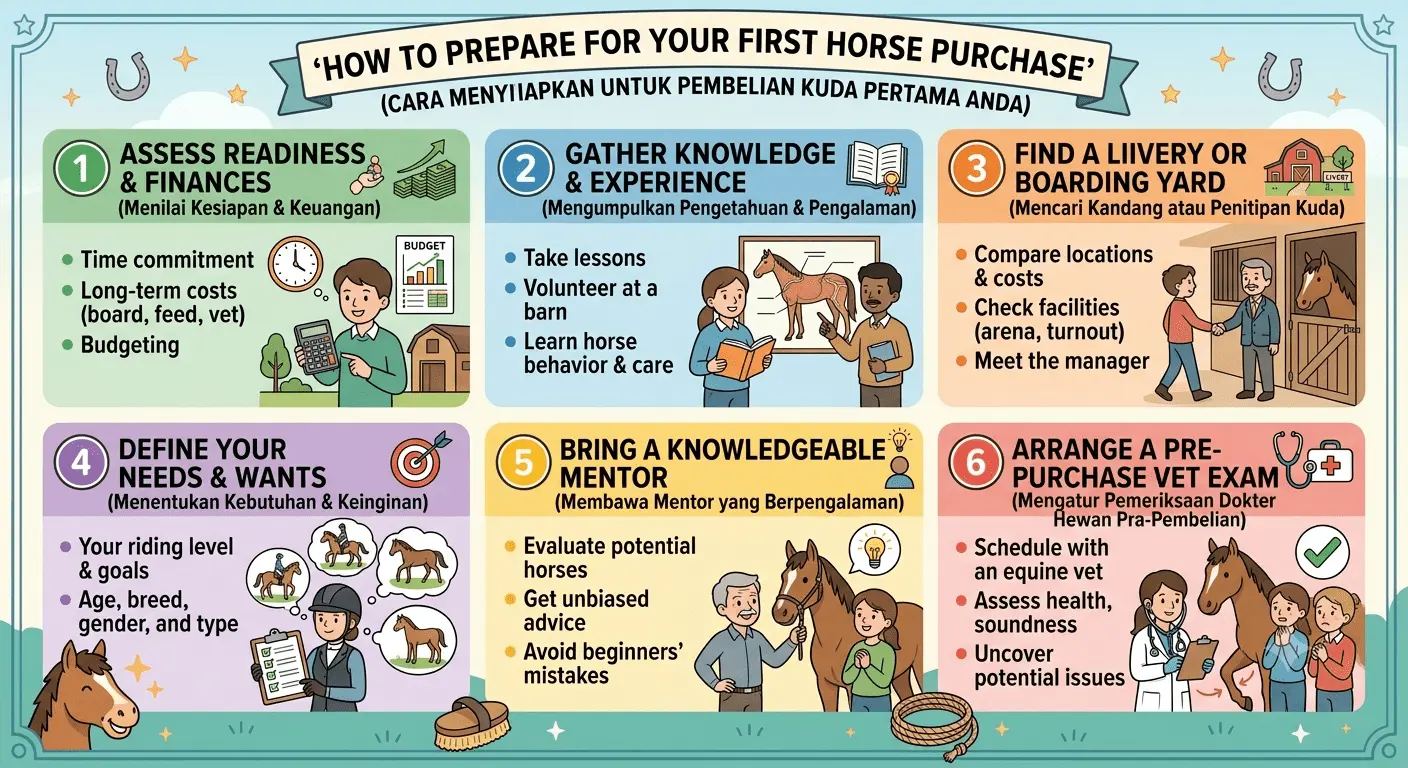

Purchasing your first horse is an exciting milestone, but it is also a major commitment that requires careful planning and preparation. Horses can live for 25 years or more and require ongoing investments of time, money, knowledge, and responsibility.
Before bringing a horse home, prospective owners should evaluate their goals, budget, facilities, and support network to ensure they are fully prepared for the responsibilities of horse ownership.
Understand Why You Want a Horse
The first step in purchasing a horse is identifying your goals. Different horses are suited for different purposes, including recreational riding, trail riding, competition, companionship, therapy programs, or breeding.
Clearly defining your objectives helps narrow your search and improves the likelihood of finding a suitable match.
Create a Realistic Budget
Many first-time buyers focus primarily on the purchase price, but the ongoing costs of horse ownership are often much greater. Responsible ownership includes budgeting for:
- Feed and hay
- Veterinary care
- Farrier services
- Boarding expenses
- Equipment and tack
- Emergency medical costs
- Training and lessons
- Insurance (if applicable)
Financial planning helps ensure long-term stability and proper care for the horse.
Learn Basic Horse Care Before Buying
New owners should understand the fundamentals of feeding, grooming, hoof care, stable management, and equine health before making a purchase. Gaining practical experience through riding lessons, volunteering, or working with experienced horse owners can provide valuable insights.
Education helps build confidence and reduces the likelihood of common first-time ownership mistakes.
Choose the Right Horse for Your Experience Level
One of the most common mistakes new owners make is purchasing a horse that exceeds their skill level. Temperament, training, age, and experience are often more important than appearance or breed.
Many equine professionals recommend selecting a calm, well-trained horse that matches the rider's abilities and intended activities. Responsible horse ownership begins with choosing a horse that supports safe learning and long-term success.
Arrange Suitable Housing and Care
Before purchasing a horse, ensure appropriate facilities are available. Horses require safe fencing, shelter, clean water, quality forage, and adequate space for movement and exercise.
Owners who do not maintain private facilities should research reputable boarding options that meet the horse's needs.
Build a Support Team
Successful horse ownership often depends on having access to qualified professionals who can provide guidance and assistance.
- Equine veterinarian
- Farrier
- Trainer or instructor
- Boarding facility manager
- Experienced horse owners and mentors
Building a knowledgeable support network before purchasing a horse can make the transition into ownership much smoother.
Schedule a Pre-Purchase Examination
A veterinary pre-purchase examination is one of the most important steps in the buying process. The examination evaluates the horse's overall health, soundness, and suitability for its intended purpose.
This assessment can identify potential concerns and help buyers make informed decisions before finalizing a purchase.
Understand the Long-Term Commitment
Horse ownership is a long-term responsibility that extends well beyond the initial purchase. Owners must be prepared to provide consistent care, attention, and financial support throughout the horse's life.
Careful consideration of future circumstances can help ensure a stable and positive environment for the horse.
Use Trusted Educational Resources
The United Horse Coalition Own Responsibly initiative encourages prospective owners to carefully evaluate the long-term responsibilities of horse ownership before purchasing a horse. The program provides educational materials covering costs, care requirements, planning, and responsible decision-making for future horse owners.
Your First Horse Purchase Checklist
- Define ownership goals
- Establish a realistic budget
- Learn basic horse care skills
- Research breeds and temperaments
- Arrange housing and facilities
- Build a support network
- Schedule a veterinary pre-purchase exam
- Prepare for long-term responsibilities
Helpful Resources for First-Time Buyers
Reviewing a comprehensive horse buying guide can help prospective owners understand the key steps involved in selecting and caring for their first horse.
Learning about responsible horse ownership before making a purchase can improve long-term outcomes for both horse and owner.
Using a practical horse purchase checklist helps ensure important considerations are not overlooked during the buying process.
Final Thoughts
Buying your first horse is a significant decision that deserves careful planning and thoughtful preparation. By investing time in education, budgeting, facility planning, and professional guidance, first-time buyers can make informed decisions that support successful horse ownership.
Preparation is one of the best investments a future horse owner can make, helping create a safe, rewarding, and lasting partnership between horse and rider.