
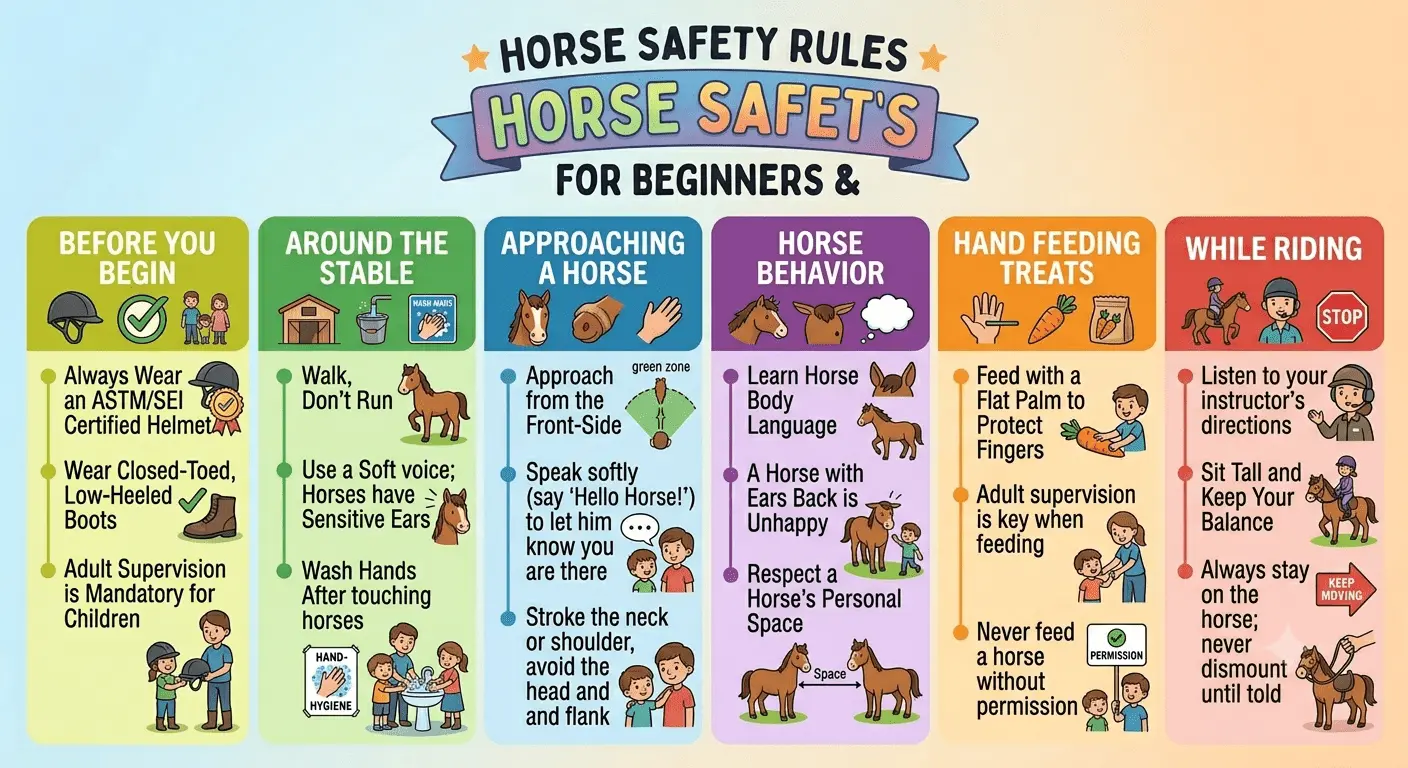

Spending time around horses can be an enjoyable and rewarding experience for individuals and families. However, horses are large, powerful animals that require respect, understanding, and proper handling. Whether you're a first-time rider, a parent introducing children to horses, or a new horse owner, following basic safety practices is essential.
Learning horse safety rules helps reduce the risk of accidents while creating positive experiences for both people and horses. A strong foundation in equestrian safety benefits riders of all ages and experience levels.
Why Horse Safety Matters
Horses are prey animals with strong instincts and quick reactions. Sudden movements, loud noises, unfamiliar objects, or unexpected situations can startle even well-trained horses. Understanding equine behavior is one of the most important aspects of staying safe around horses.
Safety education helps prevent injuries while promoting confidence and responsible horsemanship.
1. Always Approach a Horse Calmly
Approach horses slowly and confidently, preferably from the side where they can clearly see you. Avoid approaching directly from behind, as horses may become startled and react unexpectedly.
Speaking calmly as you approach can help alert the horse to your presence.
2. Wear Appropriate Safety Equipment
Proper riding attire plays an important role in equestrian safety. Riders should wear approved riding helmets, sturdy footwear with heels, and appropriate clothing designed for riding activities.
Helmet use significantly reduces the risk of serious head injuries during riding activities. Safety organizations consistently recommend helmets for riders of all ages and experience levels.
3. Understand Horse Body Language
Learning to recognize signs of stress, fear, discomfort, or relaxation helps handlers respond appropriately. Ear position, tail movement, posture, and facial expressions can provide valuable information about a horse's emotional state.
Understanding these signals improves communication and helps prevent misunderstandings that may lead to accidents.
4. Supervise Children Around Horses
Children should always be supervised when interacting with horses. Young riders and visitors may not fully understand safe handling practices or recognize potential hazards.
Adult supervision ensures that interactions remain safe, educational, and enjoyable.
5. Never Run or Make Sudden Movements
Quick movements and loud noises can startle horses. Walking calmly and maintaining predictable behavior helps create a safer environment for both handlers and horses.
This is particularly important for beginners who are still learning how horses respond to their surroundings.
6. Use Proper Leading Techniques
When leading a horse, walk beside the horse's shoulder while maintaining a safe distance. Avoid wrapping lead ropes around your hands or body, as this can create serious injury risks if the horse suddenly moves.
Proper leading techniques are a fundamental part of responsible horse handling.
7. Maintain Safe Distances Between Horses
Horses may kick if they feel crowded or threatened. Riders and handlers should maintain adequate spacing between horses, particularly during lessons, trail rides, and group activities.
Giving horses sufficient personal space helps reduce conflicts and unexpected reactions.
8. Learn Basic Riding Safety
Beginners should learn mounting, dismounting, stopping, steering, and emergency procedures under professional supervision. Structured instruction helps riders develop confidence while minimizing unnecessary risks.
Quality instruction establishes good habits that contribute to long-term riding safety.
9. Inspect Equipment Before Riding
Bridles, saddles, girths, stirrups, halters, and lead ropes should be inspected regularly for signs of wear or damage. Faulty equipment can create dangerous situations during handling or riding.
Routine equipment checks are an important part of horse management and safety.
10. Continue Learning About Horse Safety
Equestrian safety is an ongoing learning process. Riders and owners should continue expanding their knowledge through educational programs, professional instruction, and reputable equine resources.
Continued education helps individuals build confidence while improving safety awareness around horses.
Safety in Equine Training
The Safety in Equine Training Guide emphasizes understanding horse behavior, using proper handling techniques, wearing appropriate protective equipment, and maintaining safe training environments. Educational safety resources can help both beginners and experienced horse owners reduce risks and improve horse-human interactions.
Building Safe Habits Around Horses
Developing strong safety habits begins with understanding proper horse handling safety practices and applying them consistently.
Families introducing children to horses can benefit from learning beginner riding safety principles before participating in riding lessons or equestrian activities.
Accessing reliable equestrian education resources helps riders and horse owners continue developing safe and responsible horsemanship skills.
Final Thoughts
Horse safety is a shared responsibility between riders, handlers, instructors, and horse owners. By understanding horse behavior, using proper equipment, supervising children, and following proven safety practices, families can enjoy rewarding equestrian experiences while minimizing risks.
Education, awareness, and respect for horses remain the foundation of safe and successful horse-human relationships.