
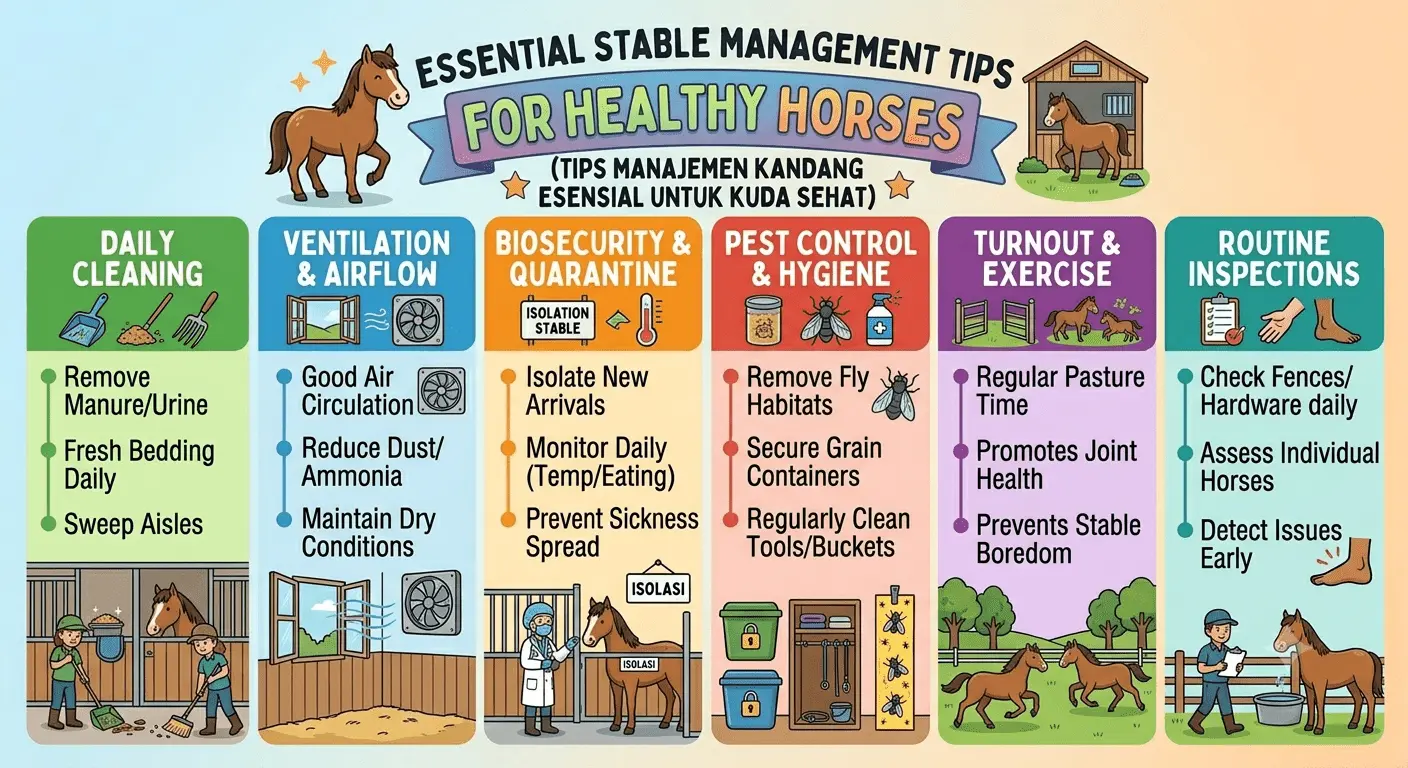

Proper stable management plays a critical role in maintaining the health, comfort, and well-being of horses. Whether caring for a single companion horse or managing a larger equestrian facility, a clean, safe, and organized stable environment helps reduce health risks while supporting overall horse welfare.
Effective stable management involves much more than cleaning stalls. It includes proper sanitation, ventilation, feeding practices, safety procedures, facility maintenance, and daily observation of each horse's condition.
Why Stable Management Matters
A well-managed stable helps prevent illness, injuries, respiratory issues, parasite infestations, and behavioral problems. Horses spend significant time in their living environment, making facility management an essential part of responsible horse ownership.
Good management practices contribute to healthier horses, lower veterinary costs, and improved overall welfare. The American Association of Equine Practitioners (AAEP) emphasizes proper housing, sanitation, and daily care as important components of horse health management.
1. Maintain Clean Stalls Daily
Daily stall cleaning is one of the most important responsibilities in stable management. Removing manure, wet bedding, and contaminated materials helps reduce bacteria, odors, parasites, and ammonia buildup.
Clean stalls create a healthier environment and help improve horse comfort.
2. Provide Proper Ventilation
Poor ventilation can contribute to respiratory problems caused by dust, mold spores, and ammonia fumes. Fresh air circulation helps maintain air quality and supports healthy lung function.
Stable designs should encourage adequate airflow while still protecting horses from severe weather conditions.
3. Ensure Access to Clean Water
Fresh, clean water should be available at all times. Water containers, automatic waterers, and troughs should be inspected and cleaned regularly to prevent contamination.
Hydration is essential for digestion, temperature regulation, and overall health.
4. Store Feed Properly
Feed and hay should be stored in dry, secure locations protected from moisture, rodents, insects, and contamination. Proper storage helps maintain nutritional quality while reducing waste.
Feeding areas should remain clean and organized to minimize health risks.
5. Establish Consistent Feeding Schedules
Horses thrive on routine. Feeding horses at consistent times each day helps support digestive health and reduces stress-related behaviors.
Any dietary changes should be introduced gradually to minimize digestive disturbances.
6. Monitor Stable Safety
Regularly inspect fences, gates, doors, flooring, lighting, and equipment for potential hazards. Sharp edges, damaged structures, loose hardware, and unsafe surfaces can increase the risk of injury.
Preventive maintenance helps create a safer environment for both horses and handlers.
7. Implement Effective Parasite Control
Parasite management programs should include manure removal, pasture rotation when possible, and veterinary-guided deworming strategies.
Reducing parasite exposure contributes to better health and improved overall condition.
8. Observe Horses Daily
Daily observation allows caretakers to identify changes in appetite, behavior, movement, hydration, and overall health. Early detection often improves treatment outcomes and helps prevent more serious issues.
Routine monitoring is one of the most valuable management practices available to horse owners.
9. Maintain Comfortable Bedding
Quality bedding provides comfort, insulation, and moisture absorption. Bedding materials should be clean, dry, and appropriate for the horse's needs.
Regular replacement helps maintain a hygienic living environment.
10. Develop Emergency Preparedness Plans
Every stable should have emergency procedures for severe weather, fire, medical emergencies, and evacuation situations. Staff and horse owners should know emergency contacts, evacuation routes, and response protocols.
Preparation helps improve safety and response effectiveness during unexpected events.
AAEP Horse Owner Recommendations
The Penn State Equine Management Resources provide educational information covering horse health, housing, nutrition, preventive care, biosecurity, and facility management. These resources help horse owners create safe and healthy environments that support long-term equine welfare.
Creating a Healthy Horse Environment
A successful stable management guide focuses on cleanliness, safety, routine care, and horse well-being.
Maintaining a healthy horse environment supports physical health, reduces stress, and promotes positive behavior.
Well-designed horse care facilities provide the foundation for responsible horse ownership and effective equine management.
Final Thoughts
Stable management is a cornerstone of responsible horse care. By maintaining clean facilities, providing proper nutrition and hydration, monitoring health daily, and prioritizing safety, horse owners can create environments where horses thrive.
Consistent management practices not only improve horse welfare but also contribute to a safer and more enjoyable experience for owners, caretakers, and equestrian professionals alike.