
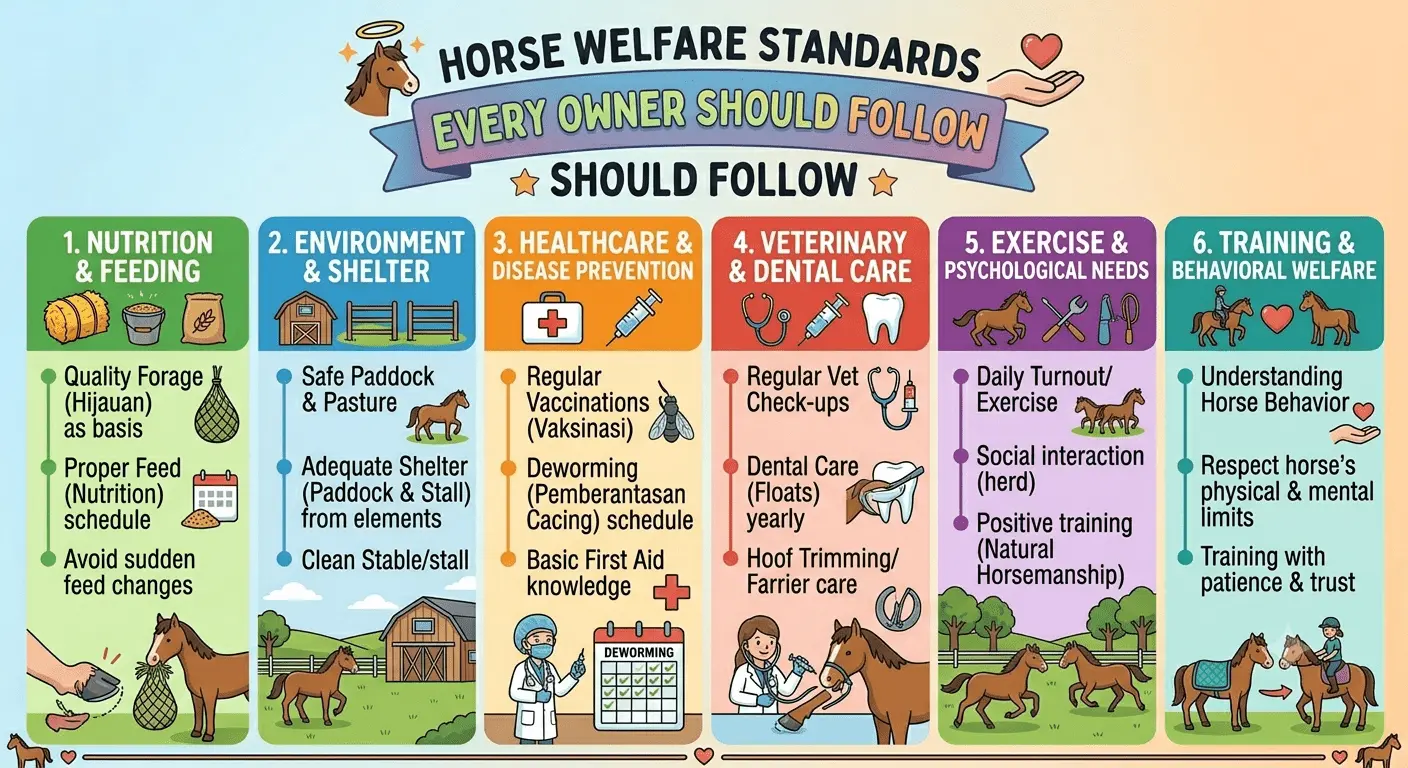

Horse welfare is the foundation of responsible horse ownership. Every horse deserves proper care, appropriate nutrition, safe housing, regular healthcare, and an environment that supports both physical and mental well-being. Whether caring for a companion horse, performance horse, rescue horse, or retired equine, welfare should remain the highest priority.
Understanding and following established horse welfare standards helps ensure horses live healthy, comfortable, and fulfilling lives while strengthening the relationship between horses and their caretakers.
What Is Horse Welfare?
Horse welfare refers to the overall physical and psychological well-being of a horse. Good welfare involves more than simply preventing illness or injury. It also includes providing opportunities for natural behaviors, social interaction, proper exercise, and a safe environment.
Modern equine welfare programs emphasize meeting a horse's physical, emotional, and behavioral needs throughout its life.
1. Provide Access to Clean Water
Fresh, clean water should be available to horses at all times. Water supports digestion, circulation, temperature regulation, and overall health. Dehydration can quickly lead to serious health complications and reduced performance.
Water sources should be inspected and cleaned regularly to ensure they remain safe and accessible.
2. Ensure Proper Nutrition
Every horse requires a balanced diet appropriate for its age, workload, health condition, and environment. High-quality forage should form the foundation of most equine feeding programs.
Proper nutrition contributes to healthy body condition, digestive health, immune function, and long-term well-being.
3. Provide Safe Shelter and Housing
Horses require protection from extreme weather conditions, including excessive heat, cold, wind, rain, and storms. Safe shelter helps reduce stress and minimizes the risk of weather-related health issues.
Housing facilities should be clean, well-maintained, and free from hazards that could cause injury.
4. Prioritize Preventive Healthcare
Routine veterinary care is an essential component of horse welfare. Preventive healthcare programs typically include vaccinations, dental care, parasite control, wellness examinations, and disease prevention strategies.
Early detection of health concerns often improves outcomes and reduces long-term treatment costs.
5. Maintain Proper Hoof Care
Healthy hooves are critical to a horse's comfort and mobility. Regular farrier visits help prevent lameness, discomfort, and structural problems that may affect quality of life.
Hoof care schedules should be tailored to each horse's individual needs.
6. Support Natural Behaviors
Horses are social, active animals that benefit from movement, interaction, and environmental enrichment. Whenever possible, horses should have opportunities for turnout, social contact, grazing, and natural exploration.
Allowing horses to express natural behaviors contributes to both physical and mental health.
7. Use Humane Training Practices
Training methods should prioritize safety, patience, consistency, and respect for the horse. Positive, welfare-focused approaches help build trust while reducing fear, stress, and behavioral problems.
Humane training practices support long-term horse welfare and strengthen the human-horse relationship.
8. Monitor Physical and Emotional Well-Being
Daily observation allows owners to identify changes in behavior, appetite, movement, attitude, and overall condition. Subtle changes may indicate health concerns that require attention.
Consistent monitoring helps ensure horses receive prompt care when needed.
9. Plan for Lifelong Care
Responsible horse ownership includes planning for the horse's future. Horses often live 25 to 30 years or longer, requiring ongoing care throughout every stage of life.
Owners should consider long-term financial, housing, and healthcare responsibilities before acquiring a horse.
10. Continue Learning About Equine Welfare
Horse care practices continue to evolve as new research becomes available. Staying informed about equine welfare helps owners make better decisions and provide higher standards of care.
Education remains one of the most valuable tools for improving horse welfare outcomes.
Understanding Modern Horse Welfare Principles
The concept of horse welfare is often guided by internationally recognized animal welfare principles that focus on proper nutrition, comfort, health, behavioral expression, and freedom from unnecessary suffering. These principles help owners evaluate whether a horse's needs are being fully met throughout its life. Information on these welfare concepts can be found through various horse welfare organizations and educational resources. ([worldhorsewelfare.org](https://www.worldhorsewelfare.org/what-we-do/horse-welfare?utm_source=chatgpt.com))
Why Welfare Education Matters
Accessing reliable information about equine welfare standards helps owners better understand their responsibilities and improve the quality of care they provide.
Promoting responsible horse ownership strengthens the overall welfare of horses while supporting ethical and sustainable equestrian practices.
Ongoing horse welfare education empowers owners, caretakers, and equestrian communities to make informed decisions that benefit horses for generations to come.
Horse Welfare Overview
For additional information, horse owners can review the Horse Welfare Overview provided by welfare-focused equine organizations. These resources discuss best practices in horse care, welfare assessment, responsible ownership, and lifelong equine management. ([worldhorsewelfare.org](https://www.worldhorsewelfare.org/?utm_source=chatgpt.com))
Final Thoughts
Horse welfare is not a single action but an ongoing commitment to meeting a horse's physical, emotional, and behavioral needs. By following recognized welfare standards and continuously improving management practices, owners can provide safe, healthy, and enriching lives for their horses.
Responsible care, education, and compassion remain the foundation of excellent horse welfare and long-term equine well-being.