
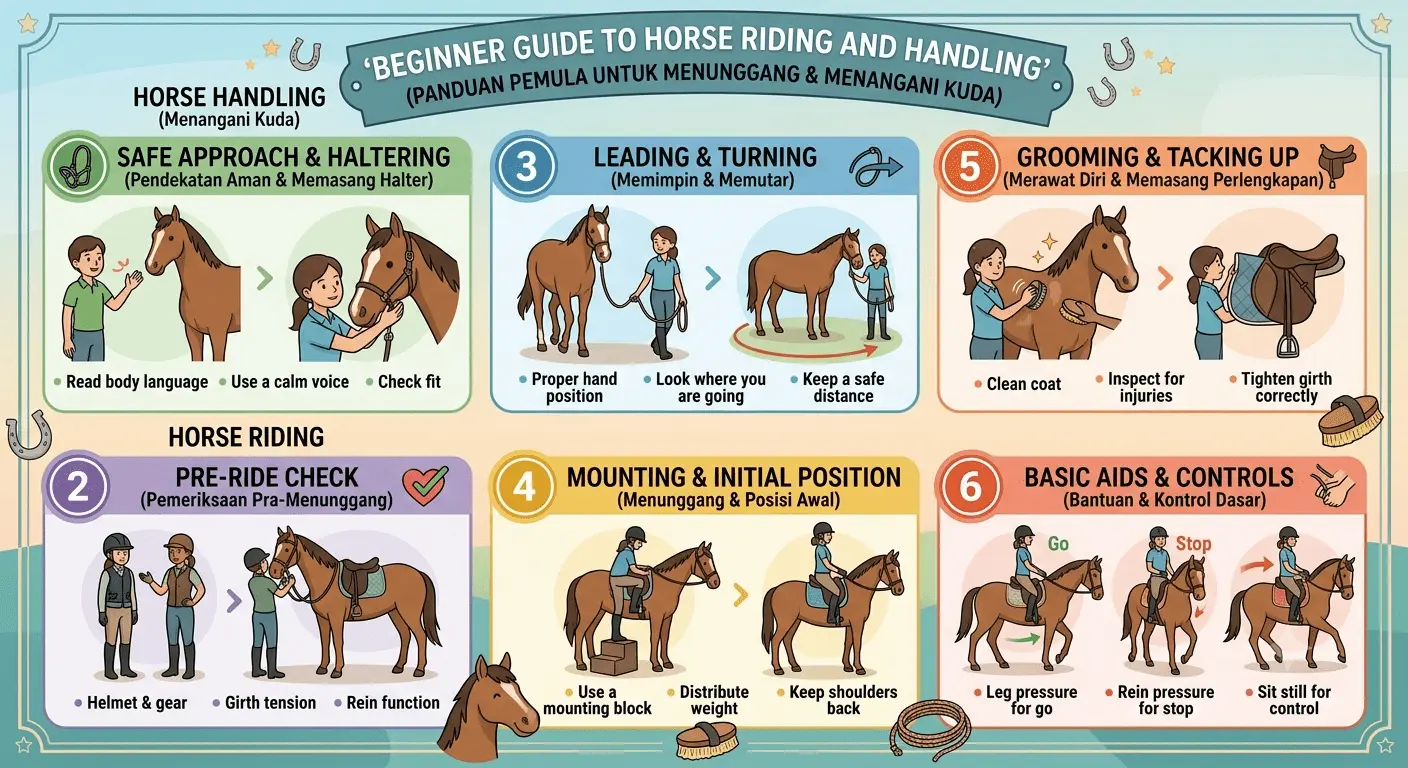

Learning to ride and handle horses can be one of the most rewarding experiences for beginners. Horses are intelligent, sensitive animals that respond to clear communication, consistency, and patience. Whether your goal is recreational riding, equestrian sport participation, or simply spending time around horses, developing strong foundational skills is essential.
This guide introduces the basic principles of horse riding and handling that every beginner should understand before working with horses.
Understanding Horse Behavior
Before climbing into the saddle, it is important to understand how horses think and behave. Horses are prey animals that naturally rely on awareness and quick reactions for survival. They communicate through body language, movement, posture, and facial expressions.
Recognizing signs of relaxation, curiosity, discomfort, or stress helps riders interact with horses more safely and effectively.
Wear Proper Riding Equipment
Safety should always be a top priority when riding or handling horses. Beginners should wear properly fitted riding helmets, sturdy boots with heels, comfortable riding attire, and other recommended safety equipment.
Protective gear helps reduce injury risks while increasing rider confidence during lessons and practice sessions.
Learn Basic Horse Handling Skills
Horse handling begins before riding. New riders should learn how to safely approach, halter, lead, groom, and tie a horse. These skills create a foundation for effective communication and help build trust between horse and handler.
Proper handling techniques also reduce the likelihood of accidents and misunderstandings.
Approaching and Leading a Horse
Approach horses calmly from the side where they can easily see you. Avoid sudden movements or loud noises that may startle them.
When leading a horse, walk confidently beside its shoulder while maintaining a safe distance. Never wrap lead ropes around your hands or body.
Mastering Basic Riding Position
Developing a balanced riding position is one of the most important skills for beginners. Riders should focus on maintaining proper posture, keeping heels down, looking ahead, and sitting evenly in the saddle.
A balanced position improves communication with the horse while enhancing safety and control.
Learning Essential Riding Skills
Most beginner riding programs focus on a series of foundational skills, including:
- Mounting and dismounting safely
- Starting and stopping the horse
- Steering and turning
- Maintaining balance
- Controlling speed
- Understanding riding aids
- Developing confidence in the saddle
Professional instruction helps riders learn these skills correctly from the beginning.
The Importance of Riding Lessons
Qualified riding instructors provide structured learning environments where beginners can safely develop riding and handling skills. Lessons allow riders to receive immediate feedback, improve technique, and gain confidence.
Regular instruction often accelerates learning while promoting safe horsemanship practices.
Common Mistakes Beginners Make
- Looking down instead of ahead
- Holding the reins too tightly
- Using poor posture
- Rushing the learning process
- Ignoring horse body language
- Failing to wear safety equipment
- Becoming tense while riding
Most of these mistakes improve naturally through practice, patience, and proper instruction.
Building Trust With Your Horse
Successful horsemanship is built on trust, consistency, and respect. Horses learn through repetition and clear communication. Spending time grooming, handling, and interacting with horses outside of riding sessions helps strengthen the relationship between horse and rider.
Trust develops gradually and contributes significantly to safe and enjoyable riding experiences.
Learning From Educational Resources
The Beginner Horse Riding Mistakes Guide highlights many of the common challenges new riders encounter and offers practical advice for developing better riding habits. Educational resources like these can help riders improve confidence, safety awareness, and overall riding ability.
Continuing Your Equestrian Education
Developing strong horse riding basics creates a solid foundation for future riding success.
Understanding safe horse handling techniques helps beginners interact with horses confidently while reducing risks.
Accessing reliable equestrian learning resources allows riders to continue expanding their knowledge and horsemanship skills throughout their equestrian journey.
Final Thoughts
Horse riding and handling are lifelong learning experiences that combine skill, knowledge, patience, and respect for horses. By focusing on safety, proper instruction, and consistent practice, beginners can build confidence while developing strong horsemanship habits.
Every experienced rider started as a beginner. With dedication and a willingness to learn, anyone can develop the skills necessary to enjoy safe and rewarding experiences with horses.