
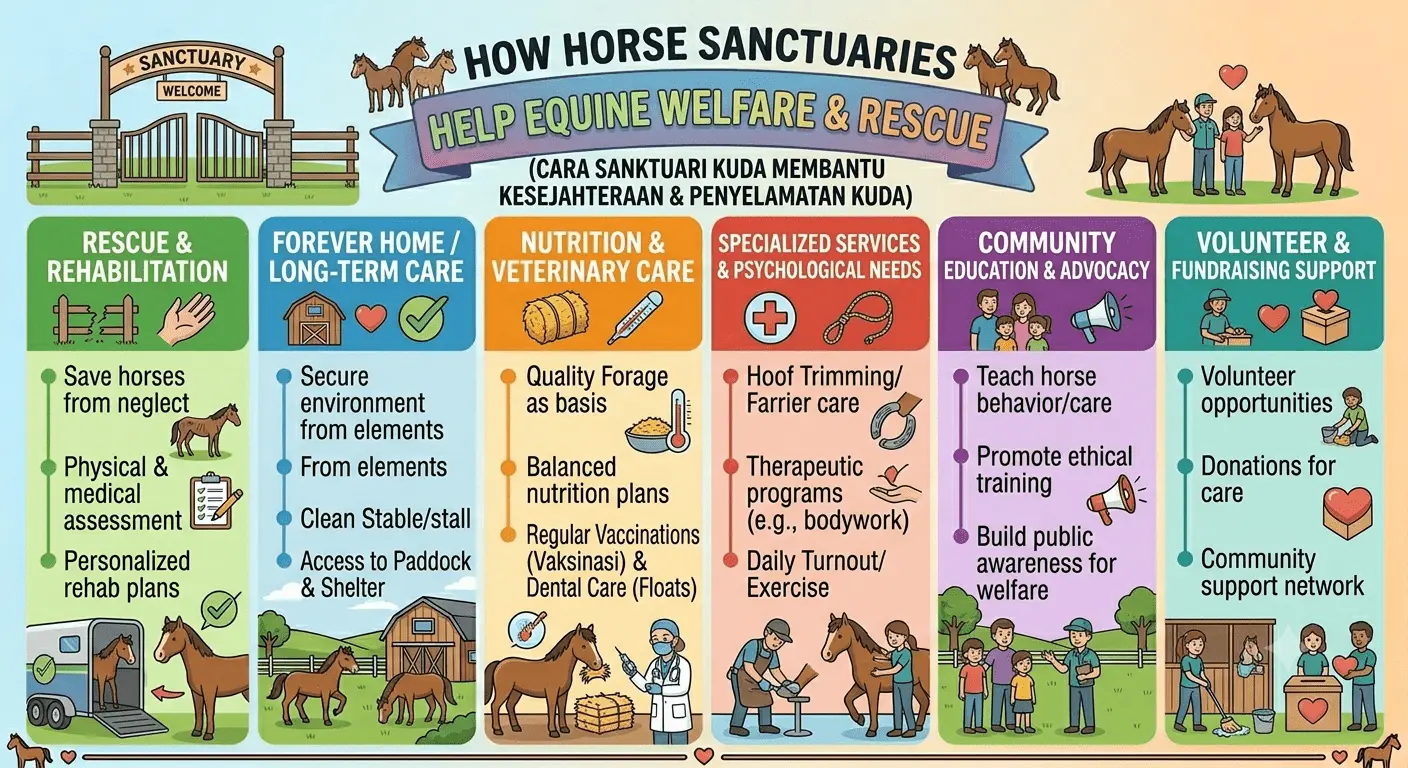

Horse sanctuaries play a vital role in protecting vulnerable horses and promoting equine welfare. Across the world, sanctuaries provide refuge, rehabilitation, and lifelong care for horses that have experienced neglect, abuse, abandonment, illness, injury, or other difficult circumstances.
Beyond providing shelter, horse sanctuaries contribute to education, advocacy, rehabilitation, adoption programs, and public awareness efforts that support responsible horse ownership and long-term welfare improvements.
What Is a Horse Sanctuary?
A horse sanctuary is a facility dedicated to providing care and protection for horses in need. While some rescued horses are rehabilitated and adopted into suitable homes, others may remain under sanctuary care for the rest of their lives due to age, medical conditions, behavioral challenges, or special needs.
The primary goal of a sanctuary is to ensure that every horse receives appropriate care, dignity, and a safe environment.
Providing Safe Refuge for Vulnerable Horses
Many horses enter sanctuaries after experiencing neglect, abandonment, owner hardship, or welfare concerns. Sanctuaries provide immediate access to food, clean water, shelter, veterinary care, and professional support.
For horses facing uncertain futures, a sanctuary often represents the first step toward recovery and stability.
Supporting Equine Rehabilitation
Rescued horses frequently require rehabilitation before they can be safely adopted or integrated into new environments. Rehabilitation programs may include:
- Veterinary treatment
- Nutritional rehabilitation
- Hoof and dental care
- Behavioral training
- Socialization
- Exercise and conditioning
Every rehabilitation plan is tailored to the horse's individual needs, allowing each animal to progress at an appropriate pace.
Promoting Responsible Horse Ownership
Many sanctuaries actively educate the public about responsible horse ownership. Educational programs often address topics such as nutrition, healthcare, welfare standards, stable management, safety, and long-term ownership responsibilities.
Public education helps reduce future welfare problems by encouraging informed decision-making among horse owners.
Creating Adoption Opportunities
When appropriate, rehabilitated horses may be placed into carefully screened adoptive homes. Adoption programs help provide horses with permanent placements while allowing sanctuaries to assist additional horses in need.
Successful adoptions are typically supported through application processes, evaluations, and ongoing guidance to ensure positive outcomes for both horses and adopters.
Advancing Equine Welfare Standards
Horse sanctuaries often serve as advocates for improved equine welfare standards. Through outreach programs, partnerships, educational initiatives, and community engagement, sanctuaries help raise awareness about the importance of humane treatment and responsible care.
These efforts contribute to broader improvements in horse welfare throughout the equestrian community.
Supporting Senior and Special-Needs Horses
Not all rescued horses are suitable candidates for adoption. Some horses require specialized medical care, long-term management, or retirement support. Sanctuaries provide safe environments where these horses can receive lifelong care and attention.
For many animals, sanctuary care offers comfort, security, and quality of life during their later years.
Community Involvement and Volunteer Support
Many sanctuaries rely on volunteers, donors, and community partnerships to support their missions. Volunteers assist with daily horse care, facility maintenance, educational programs, fundraising activities, and public outreach.
Community involvement strengthens the ability of sanctuaries to provide high-quality care for rescued horses.
The Role of Established Welfare Organizations
Organizations such as The Horse Trust have long supported equine welfare through rescue, rehabilitation, education, and lifelong care programs. Their work highlights the importance of protecting vulnerable horses and promoting responsible ownership practices within the equestrian community.
How Sanctuaries Make a Lasting Difference
Successful horse sanctuary programs provide more than temporary shelter. They offer rehabilitation, education, advocacy, and opportunities for horses to experience safe and fulfilling lives.
Ongoing equine rescue efforts help address welfare challenges while creating positive outcomes for horses that may otherwise have limited options.
Supporting meaningful horse welfare initiatives contributes to a stronger and more compassionate future for horses and the people who care for them.
How You Can Help
Individuals can support horse welfare by volunteering, donating, adopting when appropriate, participating in educational programs, and promoting responsible horse ownership. Every contribution helps improve the lives of horses in need.
Even small actions can make a meaningful difference in supporting rescue and rehabilitation efforts.
Final Thoughts
Horse sanctuaries serve as critical resources for equine welfare, rescue, rehabilitation, and education. Through compassionate care and community support, these organizations provide hope and protection for horses facing difficult circumstances.
By supporting sanctuary programs and responsible ownership practices, horse lovers can help create a safer and more humane future for horses everywhere.