
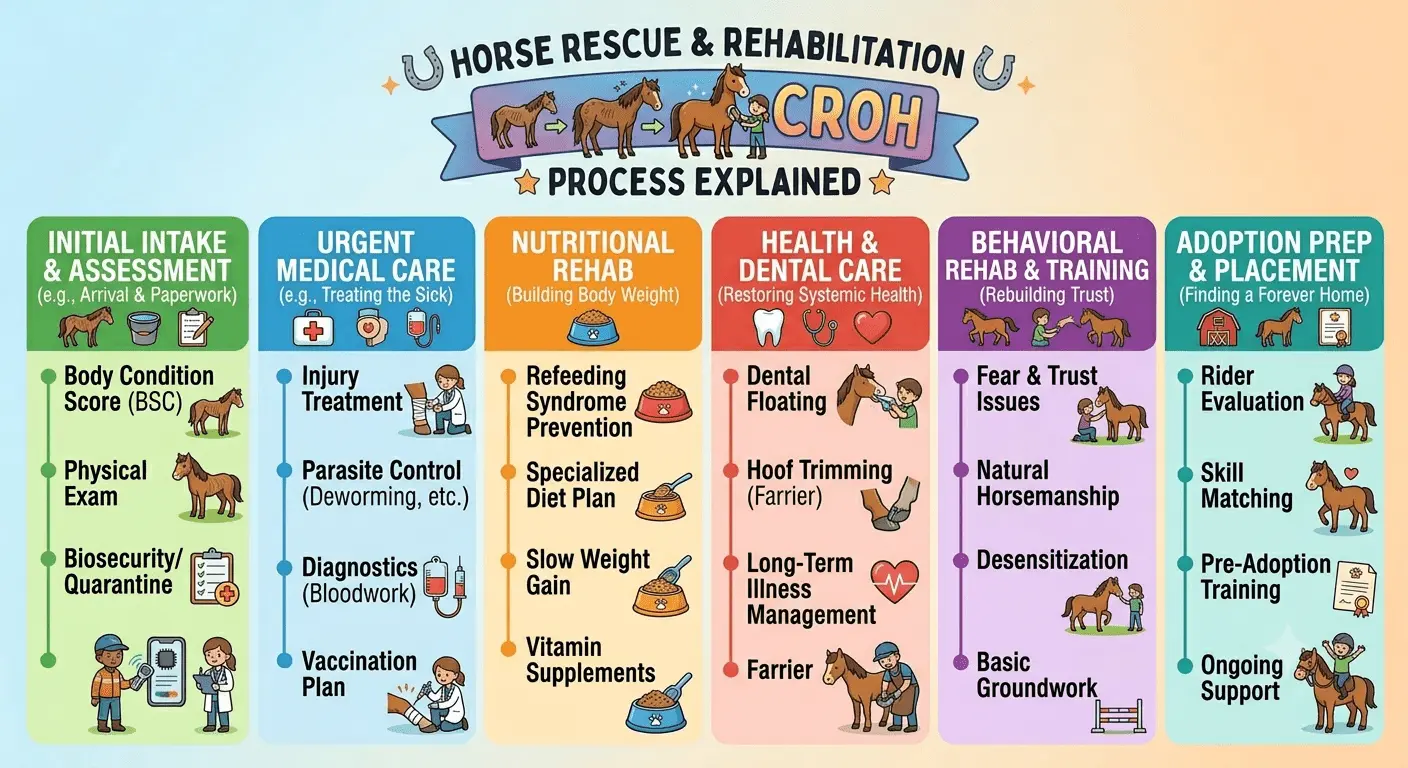

Horse rescue organizations play a vital role in protecting neglected, abandoned, abused, and vulnerable horses. Every rescued horse arrives with a unique history and set of challenges, requiring specialized care, patience, and professional rehabilitation.
Understanding the rescue and rehabilitation process helps raise awareness about equine welfare while highlighting the dedication required to give horses a second chance at a healthy and fulfilling life.
Why Horses Need Rescue and Rehabilitation
Horses may enter rescue programs for many reasons, including neglect, abandonment, owner hardship, illness, injury, abuse, or unsuitable living conditions. Some rescued horses require extensive medical treatment, while others need behavioral rehabilitation and proper nutrition.
The primary goal of any rescue program is to restore health, improve welfare, and prepare horses for long-term care, adoption, or sanctuary placement.
Step 1: Initial Intake and Assessment
Every rescue begins with a thorough evaluation. Upon arrival, horses receive a comprehensive health assessment to determine their immediate needs and overall condition.
- Physical examination
- Body condition scoring
- Hoof evaluation
- Dental assessment
- Behavioral observations
- Medical history review when available
This assessment helps create an individualized rehabilitation plan tailored to the horse's needs.
Step 2: Immediate Veterinary Care
Many rescued horses require immediate medical attention. Veterinary professionals often address issues such as malnutrition, injuries, infections, parasite infestations, dental problems, and chronic health conditions.
Vaccinations, deworming schedules, diagnostic testing, and treatment plans are typically established during the early stages of rehabilitation.
Step 3: Nutritional Rehabilitation
Proper nutrition is a critical component of recovery. Severely underweight horses require carefully managed feeding programs to safely restore body condition without causing metabolic complications.
Nutrition plans often include:
- High-quality forage
- Balanced feed programs
- Fresh water access
- Mineral supplementation
- Ongoing weight monitoring
Gradual nutritional improvement helps support healthy recovery and long-term well-being.
Step 4: Hoof and Dental Care
Neglected horses frequently suffer from overgrown hooves and untreated dental issues. Regular farrier care improves mobility, while dental treatment supports proper chewing and nutrient absorption.
These essential services contribute significantly to a horse's comfort and quality of life.
Step 5: Behavioral Rehabilitation
Some rescued horses arrive fearful, anxious, or lacking basic handling skills. Positive reinforcement, patience, and consistent training help build trust and confidence.
Behavioral rehabilitation may include:
- Groundwork training
- Desensitization exercises
- Socialization
- Routine handling
- Confidence-building activities
The pace of rehabilitation varies depending on the horse's history and individual temperament.
Step 6: Ongoing Monitoring and Recovery
Recovery often takes weeks or months, depending on the severity of the horse's condition. Rescue teams continuously monitor progress through veterinary evaluations, weight assessments, behavioral observations, and general health checks.
Patience and consistency are key components of successful rehabilitation.
Step 7: Adoption or Sanctuary Placement
Once a horse has successfully completed rehabilitation, organizations determine the most appropriate long-term outcome. Many horses become available for adoption into carefully screened homes, while others may require permanent sanctuary care due to age, medical conditions, or special needs.
The ultimate goal is always to provide a safe, stable, and supportive environment where the horse can thrive.
The Importance of Equine Welfare Organizations
Rescue centers and sanctuaries provide critical support for horses in need. These organizations rely on dedicated staff, volunteers, veterinarians, donors, and community support to deliver life-changing care.
Organizations such as The Horse Trust help promote horse welfare, rehabilitation, responsible ownership, and lifelong care for vulnerable equines.
How Rescue Programs Change Lives
Successful rehabilitation demonstrates the resilience of horses and the impact of compassionate care. Many rescued horses go on to become trusted companions, therapy horses, riding partners, or beloved members of adoptive families.
Learning about the work of a dedicated horse rescue organization helps raise awareness about equine welfare and responsible horse ownership.
Many rescue centers operate comprehensive equine rehabilitation program initiatives that focus on restoring physical health, emotional well-being, and long-term quality of life.
Supporting a meaningful horse sanctuary mission can help provide care, shelter, and hope for horses that need it most.
Final Thoughts
The horse rescue and rehabilitation process requires expertise, compassion, and dedication. From intake and medical treatment to behavioral rehabilitation and adoption, every step focuses on improving the lives of horses in need.
By supporting rescue organizations and promoting responsible horse ownership, individuals can contribute to a brighter future for vulnerable horses and the broader equine community.